
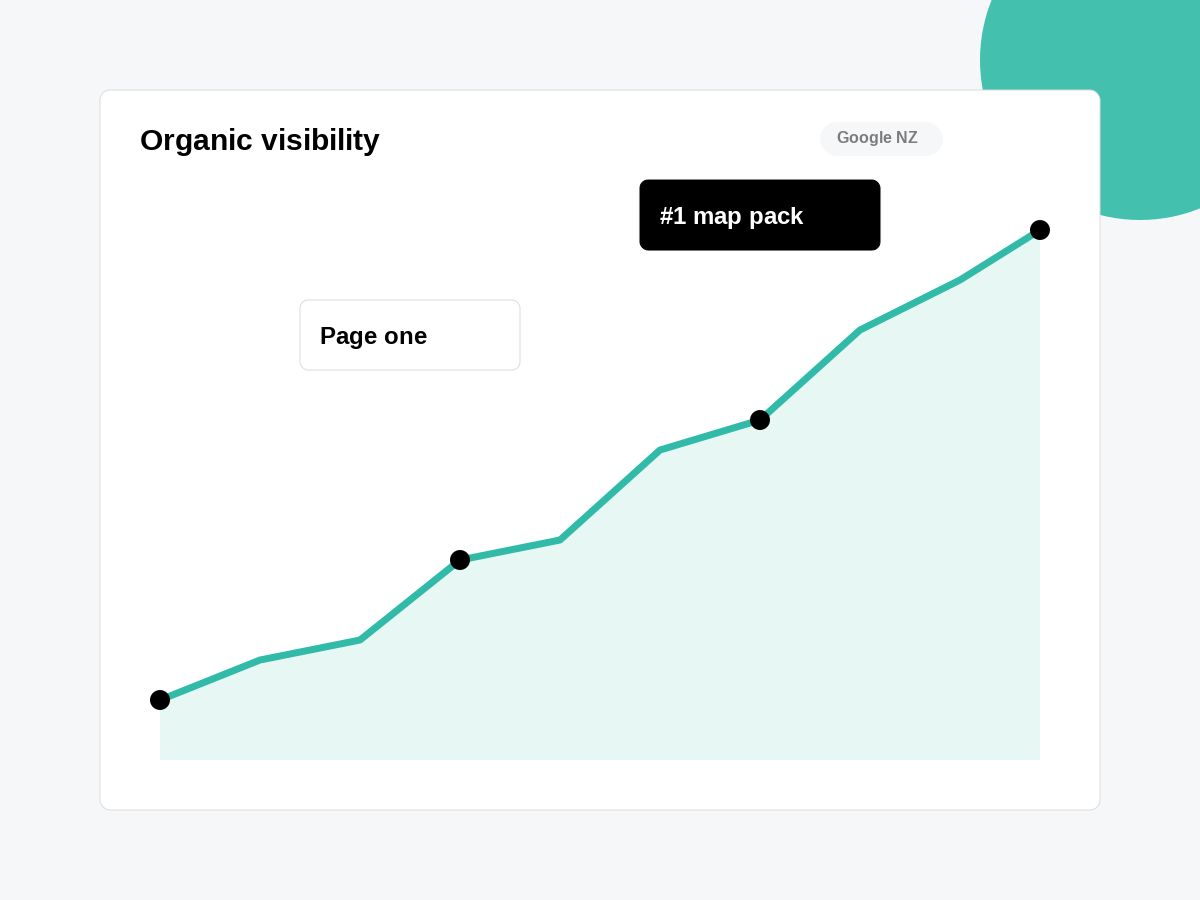
The honest answer is three to six months for the first real movement and six to twelve for results you can feel in the business. Here is what happens in each of those months, what speeds it up, what slows it down, and how to tell it is working before the phone rings.
It is the first question almost every business asks us, and the one most agencies answer badly. The vague answer is "it depends". The sales answer is "page one in thirty days". Neither helps you plan. So here is the honest version, with what actually happens in each month and the things that make it faster or slower.
The short answer: for a typical New Zealand small business, the first measurable movement shows up at three to six months, results you can feel in the business at six to twelve months, and the real return comes after that, because SEO compounds. Where you land in those ranges depends on where you start, who you are up against and how much work goes in each month.
What "working" actually means
Part of the confusion is that SEO works in stages, and each stage has its own signal. If you only watch the phone, you will think nothing is happening for months while a great deal is.
- Indexed and healthy. Google can find and read every important page, nothing is blocked, broken or duplicated, and the site is fast. This is the foundation and it shows up in Google Search Console within weeks.
- Impressions rising. Your pages start appearing in results, often on page two or three to begin with. Nobody clicks yet, but Search Console shows impressions climbing. This is the first proof the strategy is right.
- Rankings for specific searches. Long, specific searches move first: "hot water cylinder replacement Hobsonville" before "plumber Auckland". These bring the first trickle of visitors.
- Traffic you can see. Organic visits in Google Analytics rise month on month, and the searches bringing them are the ones you targeted.
- Leads. Enquiries, calls and quote requests from organic search. This is the stage the business feels, and it lags the others by a few months.
- Compounding. Pages that rank attract links and mentions, which lift every other page. Year two is usually cheaper per lead than year one.
A month by month timeline
This is what a well run campaign for a local service business usually looks like. Yours will vary, but the shape is consistent.
| Period | What is happening | What you see |
|---|---|---|
| Month 1 | Audit, technical fixes, Google Business Profile set up properly, keyword and competitor research, content plan agreed. | Not much yet. Search Console errors dropping. Possibly early local map movement. |
| Months 2 to 3 | Service pages rewritten or created, structured data added, listings and citations built, first reviews coming in. | Impressions rising. Long, specific searches start appearing on pages one to three. |
| Months 4 to 6 | Content published monthly, internal linking tightened, first links and mentions earned, pages refreshed based on data. | Organic traffic clearly up on the starting point. Local map rankings improving. First organic enquiries. |
| Months 7 to 12 | Expanding into more competitive searches, more locations or services, building authority. | Steady lead flow from search. Head terms moving onto page one for less competitive markets. |
| Year 2 onward | Maintenance, refreshing, defending positions, going after the hardest searches. | Cost per lead falling. Search becomes the most reliable channel. |
The factors that change the timeline
Where you start
A ten year old site with a hundred pages and a few hundred links has a head start a brand new domain does not. A new site, or one that has never been worked on, needs to earn trust from scratch, and that can add three to six months. On the other hand a site carrying old problems, such as thin duplicate pages, a slow page builder, or a history of bought links, can take longer still because the first months go on undoing damage.
Who you are competing with
"Florist in Helensville" and "lawyer in Auckland CBD" are not the same job. The first has a handful of competitors and can move in weeks. The second has hundreds of firms, several with large budgets, and realistic progress is measured in quarters. Part of our audit is an honest assessment of which searches are winnable in what timeframe, so the plan starts with the ones that will pay off first.
How much work goes in each month
SEO is cumulative. Two new pages a month gets you somewhere twice as fast as one. A plan that only covers technical upkeep and no content will hold your position but rarely improve it. This is the main reason monthly plans differ in price: the budget buys hours, and the hours produce the pages, links and listings that move you.
Local or national
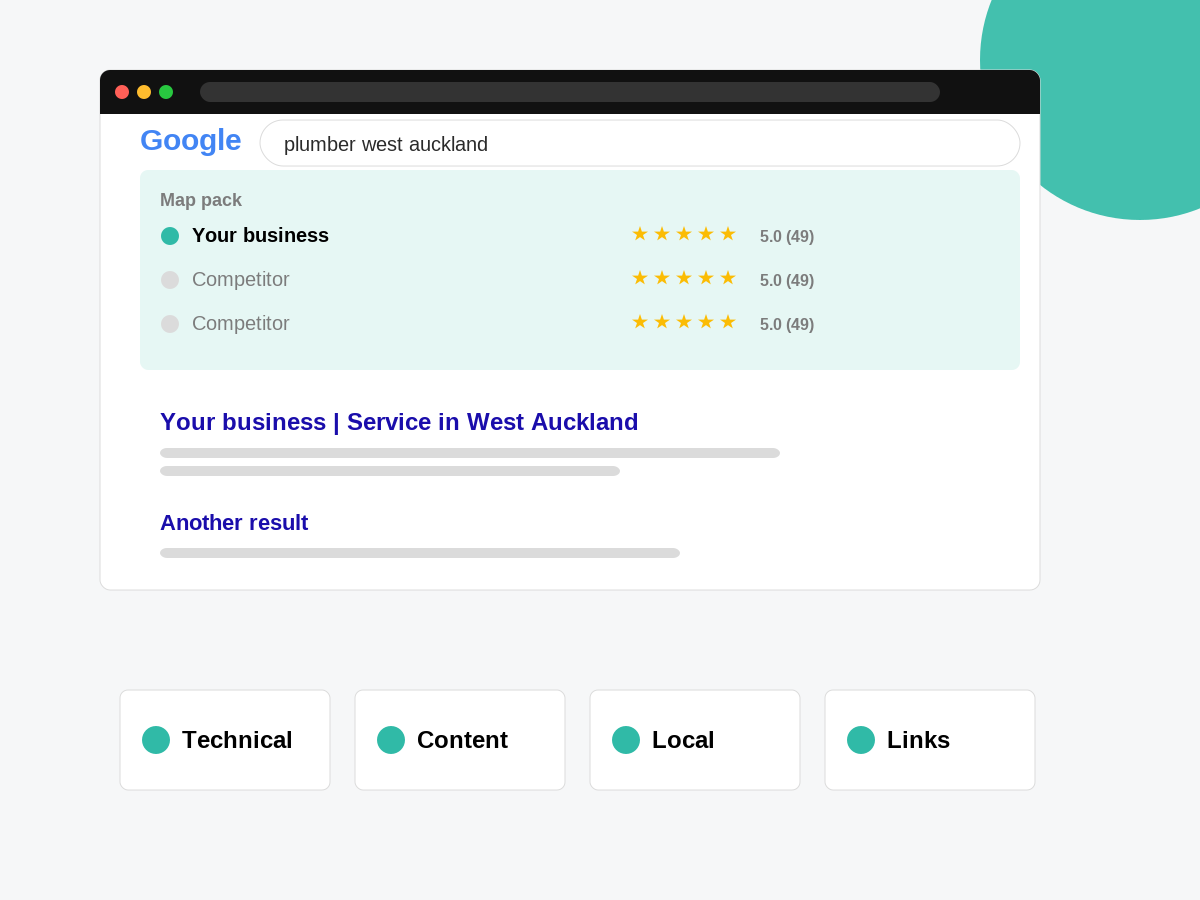
Local SEO tends to move faster because the Google Business Profile, reviews and local listings are powerful and quick to set up. If you serve one region, you may see map results change within the first two months. National or ecommerce SEO depends more on content and links, which take longer to build.
Your industry
Google holds health, finance and legal sites to a higher standard of expertise and trust, and those sectors take longer. Trades, hospitality and most professional services move at the typical pace.
Why it takes this long
It is worth understanding, because it stops you being sold shortcuts. Google does not rank a page the moment it is published. It has to crawl the page, which can take days to weeks on a small site. It then judges the page against every other page for the same search, partly on the page itself and partly on how people respond to it over time: do they click, do they stay, do they come back. Signals like reviews, mentions and links build gradually, and that slowness is deliberate, because it is what makes them hard to fake. Anything that promises to skip the wait is working against the system, and Google's updates are specifically aimed at undoing that kind of work. We have taken on several sites that were "ranking in thirty days" with a previous provider and then lost everything in a single update.
What speeds it up
- Fixing technical problems first. Content on a slow, broken site is wasted. Clearing the foundation in month one means everything after it counts.
- Targeting the right searches first. Specific, local, buying-intent searches are winnable early and bring real customers. Chasing the biggest term from day one delays everything.
- Google Business Profile and reviews. For a local business these are the fastest lever there is. A complete profile with a steady stream of reviews can move map rankings in weeks.
- Improving pages you already have. A page sitting at position twelve usually needs an afternoon's work to reach page one. New pages start from nothing.
- Consistency. One good page every month for a year beats twelve pages in January and nothing after.
What slows it down
- A redesign without redirects. The most common way we see businesses lose years of progress overnight. If you are rebuilding your site, every old URL needs to point to its new equivalent.
- Thin or copied content. Pages with a paragraph and a form, or text borrowed from a supplier, do not rank and can drag the rest of the site down.
- Bought links. They may lift you briefly and then cost you badly.
- Changing direction every month. SEO needs time for each change to be measured. Switching strategy, provider or keywords every few weeks means nothing ever gets a fair run.
- Nobody collecting reviews. A profile with four reviews from 2021 says the business is not active.
How to tell it is working before the phone rings
If you only judge SEO by leads you will make bad decisions at month three. Ask your provider for these, in this order, and expect each to move before the next:
- Search Console health: indexed pages up, errors down, Core Web Vitals passing.
- Impressions: the number of times your pages appeared in results. This should rise steadily from month two.
- Keywords in the top twenty: the count of target searches where you appear on pages one or two. It should grow every month.
- Google Business Profile actions: calls, direction requests and website clicks from your listing.
- Organic sessions: visits from search in Google Analytics, compared with the same month last year rather than last month, because many New Zealand businesses are seasonal.
- Leads from organic: tracked properly, with calls and forms attributed to search, not guessed.
Monthly reporting from us covers each of these, in plain English, so you can see which stage you are at.
What to do while you wait
If you need leads this month, SEO is not the tool for this month. Google Ads is. A sensible plan for many businesses is to run a modest Ads campaign from day one to bring in enquiries straight away, and taper it as organic search takes over. The Ads data also tells us within weeks which searches actually convert, which sharpens the SEO plan. Our Google Ads service is often run alongside SEO for exactly this reason.
In the meantime, the single most useful thing you can do yourself is ask every happy customer for a Google review. It costs nothing and it helps every stage above.
What the first ninety days look like with FWeb
We start with a full audit of your site, your Google Business Profile and your main competitors, and an honest conversation about which searches are winnable and when. Month one is the technical fix list and the profile. Months two and three are the service pages, structured data, listings and the first content, with a report at the end of each month showing impressions, rankings and what is next. If at the three month mark the impressions are not moving, we tell you, and we change the plan.
If you would like to know what a realistic timeline looks like for your business and your market, ask us for a free SEO audit. We will tell you where you stand, what is winnable in the first six months, and what it would cost. Our SEO service page explains what is included each month.
Questions.
Can SEO work in one month?
Technical fixes and a tidy Google Business Profile can lift local visibility within weeks, so you may see early movement. Rankings for competitive searches, and a steady flow of leads, take months. Anyone promising page one in thirty days is either targeting searches nobody makes or using methods that will cost you later.
Why does SEO take so long?
Google has to crawl your changes, reassess your pages against everyone else's, and watch how people respond to them over time. Trust signals such as reviews and links accumulate slowly by design, which is what makes them hard to fake.
Should I stop SEO once I am ranking?
Does a new website reset my SEO?
Only if it is done badly. A rebuild that keeps the URLs, or redirects every old one to its new home, keeps the ranking you have earned. A rebuild that drops pages and changes URLs without redirects can set you back months.
Keep reading
Related articles.
SEO 2 min
How to Show Up in ChatGPT and Google AI Overviews
More Kiwis now ask ChatGPT or read the AI Overview at the top of Google before they click anything. Here is how AI answers choose their sources, and the six things a New Zealand business can do to be one of them.